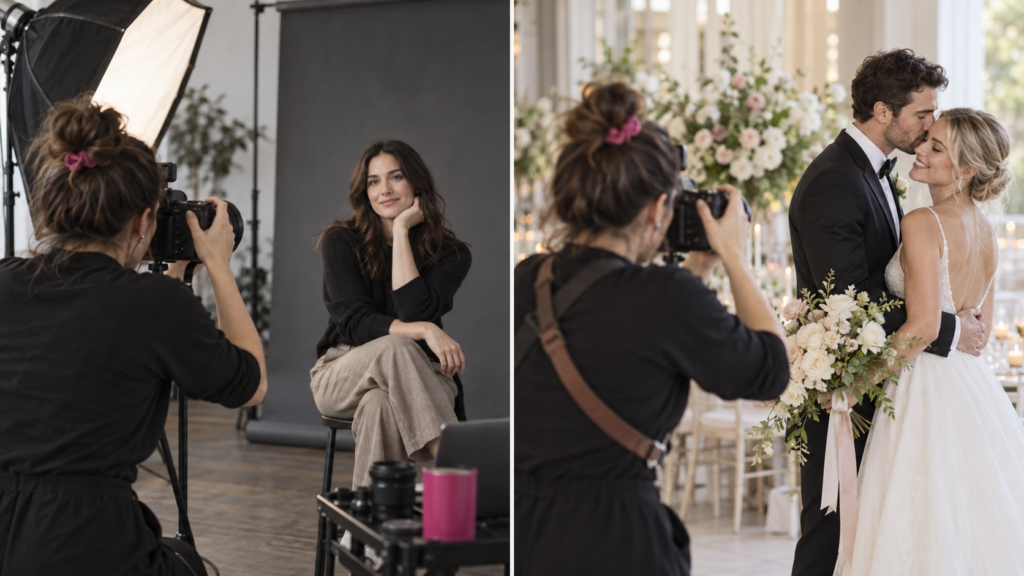
Wedding photography can produce more revenue from a single booking, but it does not automatically pay more overall than portrait photography. Weddings involve longer days, higher risk, more equipment, extensive editing and seasonal demand, while portraits can offer shorter sessions, repeat clients and a steadier booking rhythm.
The more profitable career is the one where your pricing covers every hour and expense, your market supplies enough suitable clients and your workflow delivers consistent results. National occupation data do not separate earnings by photography niche, so claims that one always pays more should be treated cautiously.
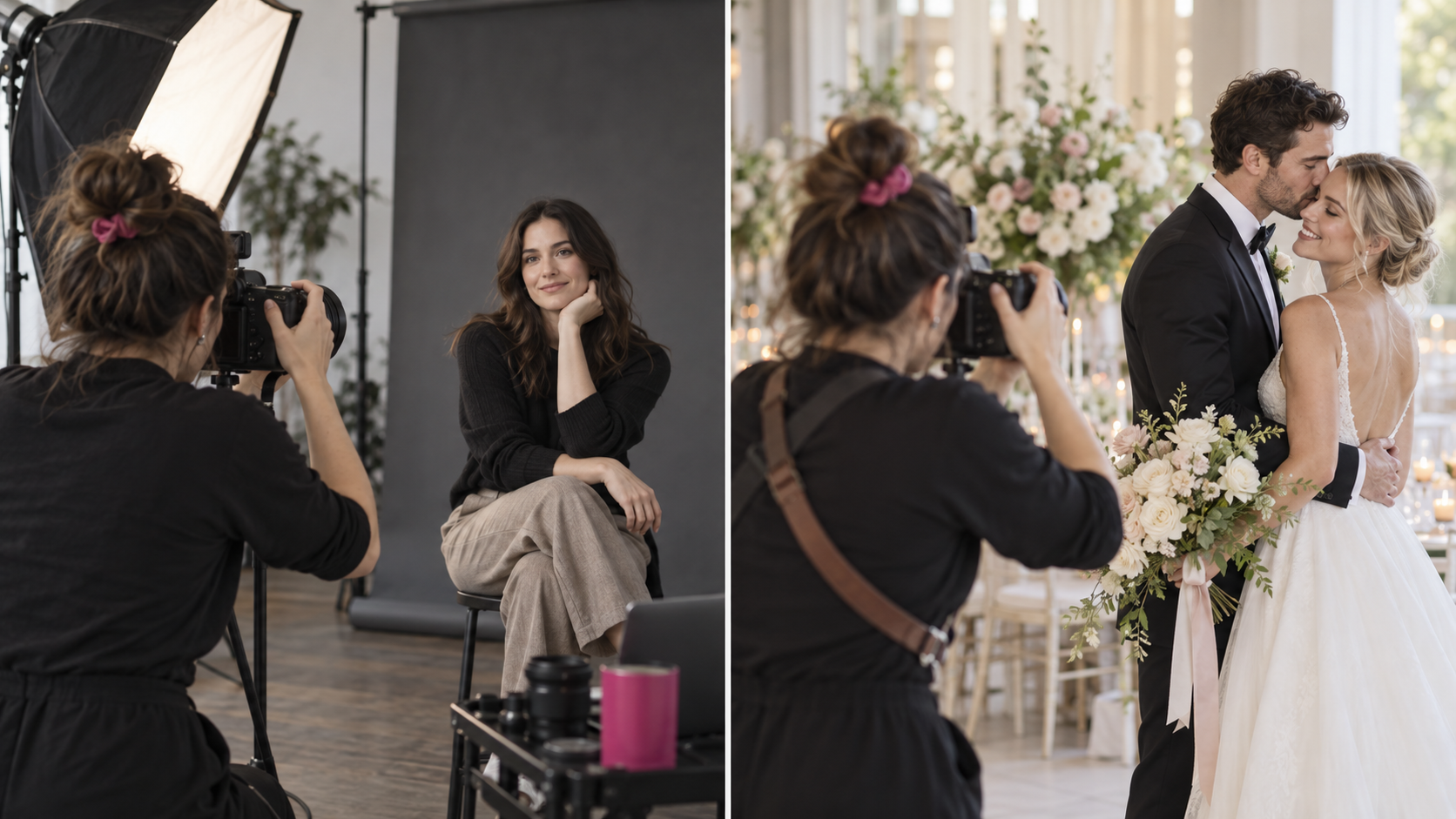
| Factor | Portrait photography | Wedding photography |
|---|---|---|
| Typical booking | Shorter planned session | Multi-hour or full-day event |
| Repeat potential | High for families, personal brands and milestones | Lower for the same couple, but strong referral potential |
| Scheduling | Often flexible and reschedulable | Fixed date with little room for failure |
| Equipment risk | Can sometimes reschedule if a critical failure occurs | Backup bodies, lenses, cards and lighting are essential |
| Editing volume | Smaller galleries or highly retouched selections | Large galleries with extensive culling and consistency work |
| Client management | Direction during a controlled session | Planning, timelines, families, suppliers and live events |
| Seasonality | Varies by niche; can run year-round | Often concentrated around popular wedding periods |
| Pressure | Moderate and often repeatable | High because key moments cannot be recreated |
Portrait work is broader than studio headshots. It can include families, maternity, newborns, graduates, personal branding, corporate teams, school photography, pets and editorial portraits.
A portrait photographer usually controls more variables than a wedding photographer. You can choose the location, time, lighting plan and duration, then guide a person or small group through poses and expressions.
The business models also vary. Some photographers charge one inclusive session fee, while others use a session fee plus products or images. Corporate and personal-brand work may involve licensing or recurring content packages.
Wedding photography combines portraiture, documentary storytelling, event coverage, low-light work, detail images and group management. The photographer must move quickly between changing environments while remaining calm and unobtrusive.
The job begins well before the wedding day. Enquiries, consultations, contracts, questionnaires, timeline planning, location research and coordination all take time. Afterwards, backing up, culling, editing, gallery delivery, albums and client communication can continue for weeks.
A higher package price therefore does not equal higher profit. It must cover the full workload, equipment redundancy and business risk.
Jobs and Skills Australia reports earnings for photographers as a whole, not separate figures for portraits and weddings. Its February 2026 profile listed 14,200 photographers, a 47% part-time share and median full-time earnings of $1,840 per week using May 2025 earnings data.
Those numbers mainly support a broad occupation comparison. They do not predict a freelancer’s bookings, revenue or profit, and they cannot establish which niche pays more. Review the official Photographers occupation profile and its methodology notes.
In practice:
Use this calculation for each service:
Estimated profit per booking = client payment − direct job costs − allocated overhead − labour value.
Direct costs may include travel, parking, second shooters, assistants, studio hire, album production, gallery fees and outsourced editing. Overheads include insurance, software, website, marketing, accounting, equipment replacement and storage.
Labour should cover every stage: enquiry, preparation, shooting, travel, culling, editing, delivery and follow-up. Divide estimated profit by total hours to compare services more honestly.
| Stage | Portrait session | Wedding booking |
|---|---|---|
| Sales and planning | Consultation, wardrobe and location guidance | Consultation, contract, questionnaire and timeline coordination |
| Photography | Often one to three hours | Often several hours to a full day |
| Travel and setup | Usually one location | May involve several locations |
| Culling | Smaller capture volume | Potentially thousands of images |
| Editing | Smaller gallery or detailed retouching | Large gallery requiring visual consistency |
| Delivery | Gallery, prints or corporate files | Gallery, previews, albums and backups |
The hours above are illustrative, not industry rules. Your workflow and promised deliverables determine the real workload.
A portrait photographer can often begin with a dependable camera, one or two suitable lenses, a reflector and a simple lighting kit. The exact setup depends on whether sessions are outdoors, in clients’ homes, in a studio or for corporate teams.
Wedding work calls for redundancy. A professional should plan for camera, lens, card, battery, lighting and data failure because the event cannot be recreated. Many photographers also use a second shooter or assistant, particularly for larger celebrations.
Equipment alone does not create readiness. You need to operate it quickly in rain, darkness, crowded rooms and strict timelines without experimenting on a client’s wedding.
Portrait marketing can target a specific repeatable need: newborn photography, professional headshots, family updates or personal-brand content. Partnerships with related local businesses and a strong referral process can support repeat demand.
Wedding photographers often rely on search, social proof, venue and supplier referrals, directories and showcase galleries. The sales cycle can be long because couples compare style, trust, package details and availability well before the date.
Reviews and full galleries matter in both niches. A small social-media highlight cannot demonstrate consistent coverage of an entire wedding or portrait session.
Wedding photography has unusually high event risk. Missed moments, illness, data loss and equipment failure can have serious consequences. Contracts, backups, insurance, emergency plans and clear communication are central.
Portraits still involve responsibility, including safe locations, client privacy, image storage, children, model releases and delivery promises. The ability to reschedule some sessions does not remove professional obligations.
Photographers supplying services to consumers must also understand Australian Consumer Law. Advertising and contract terms cannot remove rights that the law provides. Consult the ACCC consumer guarantees guidance and obtain advice for your situation.
| You may prefer portraits if you… | You may prefer weddings if you… |
|---|---|
| Enjoy controlled direction and refining small details | Think quickly during unpredictable live events |
| Want repeat clients and shorter sessions | Enjoy storytelling across an entire day |
| Prefer reschedulable work | Can manage high responsibility and fixed dates |
| Like specialising in a defined audience | Enjoy coordinating with families and suppliers |
| Want to shape lighting and posing carefully | Can combine portrait, documentary and low-light skills |
Yes. Portrait work develops posing, lighting and client direction, all of which transfer to weddings. Weddings can also generate future maternity, family and personal-brand clients.
However, do not market every genre immediately. Build competence and a coherent portfolio in one core service, then add another when your systems, equipment and client experience can support it.
Structured training can build the technical and interpersonal skills shared by both paths. Careers Collectiv’s Professional Photography Certificate covers weddings, portraits, brand and product photography. The live page currently describes online study, portfolio review by an experienced Melbourne photographer and a mirrorless camera included with enrolment.
Careers Collectiv is a private online college, not a university or Registered Training Organisation. Its certificate is career-readiness education and does not guarantee bookings, income or employment.
You can also explore the Photography & Creative Arts course collection before deciding which portfolio direction to pursue.
A useful portrait vs wedding photography decision compares the complete client journey, not just the fee shown on a package page. Score each factor from one to five using evidence from your own practice projects, local enquiries and realistic availability.
| Decision factor | Portrait photography evidence | Wedding photography evidence |
|---|---|---|
| Demand you can reach | Enquiries from families, graduates, professionals or brands | Enquiries from couples, venues or wedding suppliers |
| Profit per working hour | Session, preparation, retouching, sales and delivery time | Planning, travel, coverage, culling, editing and album time |
| Repeat business | Potential for annual, milestone or recurring brand sessions | Referrals plus later family or anniversary work |
| Operational risk | Weather, location, privacy, posing and delivery commitments | Unrepeatable moments, fixed dates, equipment failure and data loss |
| Personal fit | Patient direction, controlled lighting and detail refinement | Fast decisions, long days, crowds and changing conditions |
For a fair portrait vs wedding photography comparison, use the same accounting period. One wedding package should not be compared with a portrait session unless both calculations include every hour, direct cost and share of annual overhead.
This portrait vs wedding photography test shows whether shorter sessions actually create a more efficient workflow for you. It also reveals whether you enjoy repeated direction and the close attention to expression that strong portraits require.
Do not use a paying couple’s once-only event as an experiment. Build experience by assisting or second-shooting under an experienced professional, with responsibilities and image use agreed in writing. You can also practise timeline changes, mixed lighting, group organisation and redundant backups during an authorised styled or community event.
A credible portrait vs wedding photography comparison should include the physical and emotional load of an event day. Long hours, responsibility and constant decisions may suit one photographer and drain another.
Prepare conservative, expected and strong-demand scenarios for both services. In each portrait vs wedding photography scenario, estimate bookings, average revenue, refunds or rescheduling risk, direct costs, annual overhead and total labour hours. Avoid assuming that every available date will sell.
The exercise prevents a common portrait vs wedding photography mistake: treating gross revenue as personal income. Tax, insurance, software, equipment replacement, marketing, storage, travel and unpaid administration all affect the result.
If portraits score higher, concentrate on lighting consistency, posing, expression, client preparation and a repeatable delivery system. If weddings score higher, prioritise event exposure, anticipation, low-light work, group direction, backups and supervised experience. If the portrait vs wedding photography result is close, choose the option that lets you build trustworthy evidence with the lowest client risk.
Review the scorecard after 90 days. A sound portrait vs wedding photography choice can change as your portfolio, market, availability and confidence develop. The goal is not to declare one niche universally better; it is to select the service you can deliver consistently, profitably and responsibly.
Wedding photographers often charge more per booking, but higher costs and longer hours can reduce the difference. There is no reliable national occupation figure that separates the two niches.
Wedding work usually carries more time pressure and event risk. Portrait photography requires its own expertise in direction, lighting, expression and client experience, so “harder” depends on the photographer’s strengths.
Controlled portrait practice is generally a lower-risk place to build camera, lighting and communication skills. Beginners should not take sole responsibility for an unrepeatable wedding before they have suitable experience and backup systems.
Yes. Families, personal brands, corporate teams and milestone clients may return regularly. A strong client experience and organised follow-up process support repeat work.
A reliable backup body is a sensible risk-control measure for an unrepeatable event. The full backup plan should also include lenses, cards, batteries, lighting and data storage.
Yes. The skills overlap, but build a focused portfolio and workflow before expanding. Clear service pages help clients understand your expertise.
Estimate annual booking volume, average revenue, total labour, direct costs and overheads for each service. Compare profit and effective hourly return, not package price alone.
You do not need to commit to a niche based on headline prices. A structured trial can reveal which work suits your temperament, availability and financial goals.
Many photographers begin with portraits while gradually building event experience. Portrait work can provide regular practice in directing people, posing, lighting and client communication. Carefully supervised wedding assistance can then develop timing, anticipation and event workflow without immediately carrying sole responsibility for a couple’s once-only coverage.
A hybrid model also needs clear marketing. Separate galleries and service pages can help prospective clients understand your experience in each niche. Avoid implying that unrelated work demonstrates wedding capability; show complete, relevant examples and explain exactly what clients receive.
After several representative projects, review demand, repeatability, profit per hour, seasonal effects, physical workload and how much you enjoyed the work. The better-paying path is the one that remains profitable and sustainable for your actual market—not the one with the highest advertised package price.
Occupational information was checked in September 2026. Income varies by experience, location, niche, costs and bookings. This article is general career and business education, not financial or legal advice.