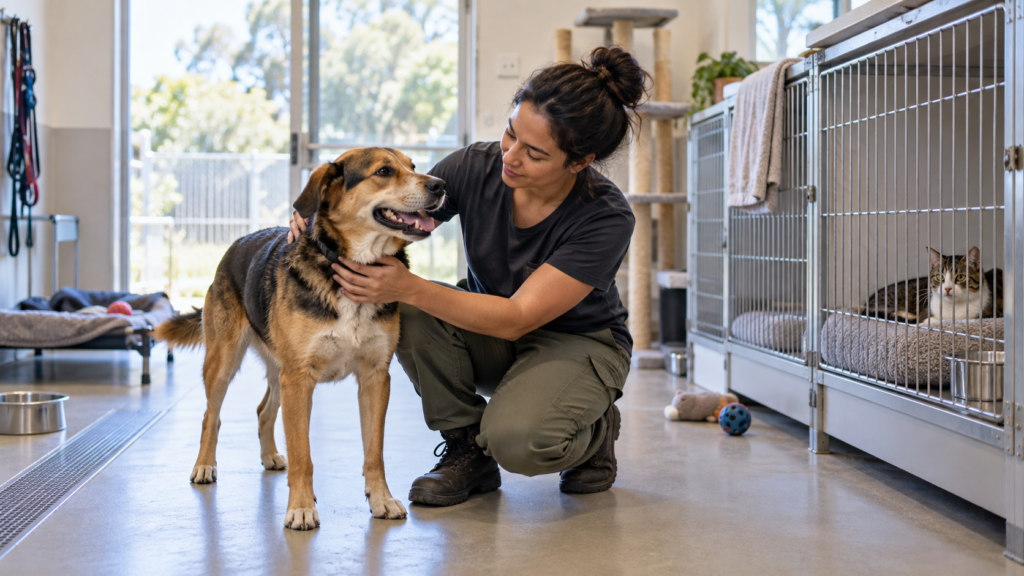
Animal care worker duties usually include feeding, cleaning animal areas, providing exercise and enrichment, observing behaviour and health, keeping records, supporting safe handling and communicating with colleagues or owners. The exact routine depends on whether you work in a shelter, boarding facility, pet-care business, wildlife setting or veterinary environment, but welfare and safety shape every task.
If you are considering an animal career, understanding the real daily work helps you decide whether the pace, physical demands and responsibility suit you. Reviewing animal care worker duties also gives you practical language for job applications and interviews.
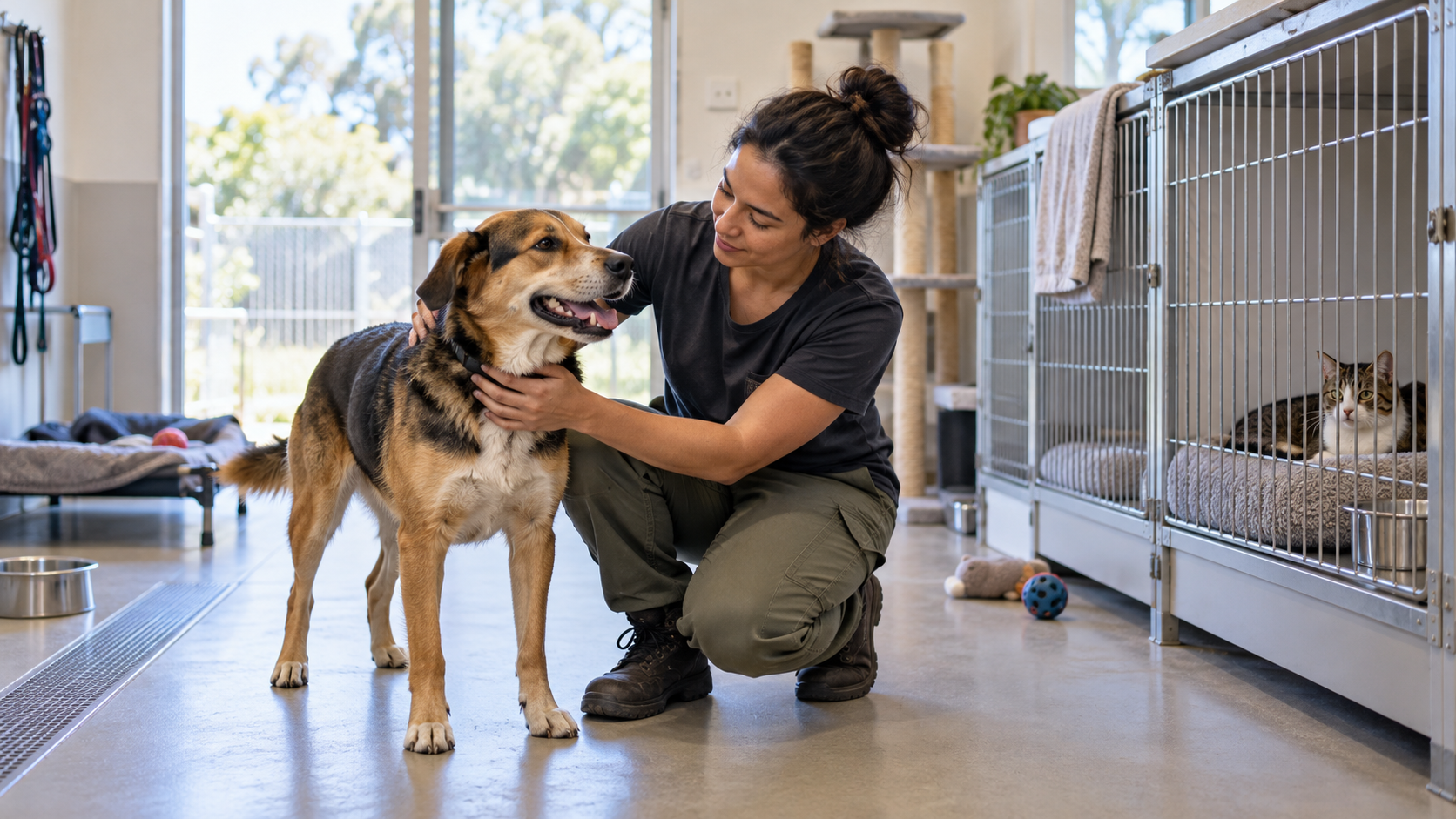
Jobs and Skills Australia describes animal attendants and trainers as workers who train, feed, groom and care for animals. In practice, a shift combines direct animal care with cleaning, monitoring and documentation.
| Duty | What it may involve | Why it matters |
|---|---|---|
| Feeding and water | Preparing correct portions, following diet notes and refreshing water | Supports health and prevents avoidable dietary problems |
| Cleaning | Removing waste, washing bowls, changing bedding and disinfecting areas | Reduces disease risk and keeps animals comfortable |
| Observation | Noting appetite, movement, coat condition, toileting and behaviour | Helps the team notice changes early |
| Exercise and enrichment | Walking, play, training games and species-appropriate activities | Supports physical and behavioural wellbeing |
| Handling | Moving or restraining animals using approved, low-stress methods | Protects the animal, worker and public |
| Records | Updating feeding, medication, cleaning or incident notes within your role | Creates continuity between shifts |
| Communication | Handovers, reporting concerns and speaking with owners or visitors | Keeps care consistent and expectations clear |
A shift often begins by reading notes and speaking with the outgoing team. You may check which animals are new, nervous, recovering, on special diets or require closer observation. A calm visual check can identify anything that needs prompt escalation.
Routine work is essential, not secondary. Workers follow feeding instructions, prevent cross-contamination and clean in an order suited to the facility. Personal protective equipment and workplace procedures should always be followed.
Animals need more than a clean space. The activity should suit the individual animal, species, health, age and behaviour. This may include walks, scent activities, gentle training, play, foraging opportunities or quiet social contact.
You may move animals between areas, help with grooming, weigh an animal or assist a more experienced colleague. An animal care worker should stay within their training and workplace authority. Diagnosis, prescribing and procedures reserved for veterinary professionals are not part of a general animal care role.
Good notes are factual and specific. Instead of writing “seems unwell”, record what you observed, such as reduced appetite, unusual posture or repeated scratching, along with the time. Report concerns using the workplace escalation process.
Job titles vary, so read the position description closely. “Animal attendant”, “kennel hand”, “cattery attendant” and “animal care assistant” can overlap, but employer expectations may differ.
Observation helps you notice small changes. Time management keeps essential tasks on schedule. Clear communication supports safe handovers. Emotional steadiness matters when animals are fearful or outcomes are difficult. Physical stamina helps with cleaning, lifting supplies and working on your feet.
Reliability is especially important because animals depend on consistent routines. Employers may also value willingness to learn, accurate record keeping and respect for hygiene and safety systems.
Careers Collectiv is a private online college. Its Animal Care & Veterinary course collection is a useful starting point for comparing flexible learning options related to animal care and welfare. Course study can help you build knowledge, but it does not replace employer induction, supervised practical experience or any licence or qualification a specific job legally requires.
You may also find our guides to becoming an animal care worker and writing an animal care resume without paid experience helpful.
Although job descriptions list standard animal care worker duties, the order changes with animal needs, staffing, emergencies and the type of workplace. A safe worker does not simply complete a checklist. They observe, communicate and confirm priorities with the appropriate supervisor.
At handover, animal care worker duties may include reviewing care notes, confirming feeding or medication instructions, checking isolation requirements and identifying animals needing closer observation. Workers should ask about unclear entries rather than infer what happened on the previous shift.
Daily animal care worker duties commonly include preparing food and water, cleaning housing, replacing bedding, supporting exercise or enrichment and maintaining organised supplies. The correct order matters. Workplace procedures may separate healthy, vulnerable and isolated animals to reduce cross-contamination.
Observation is one of the most important animal care worker duties. Workers record factual changes in appetite, drinking, elimination, mobility, behaviour or appearance and report concerns through the workplace’s escalation process. They should not diagnose an animal unless that responsibility belongs to their qualified role.
Some animal care worker duties involve speaking with pet owners, volunteers, foster carers or other staff. Communication should stay respectful, accurate and within role boundaries. Clinical questions should be referred to the veterinary team where appropriate.
Before leaving, animal care worker duties may include completing records, restocking, cleaning tools, reporting outstanding work and confirming that animals are secure and have required resources. A clear handover helps the next worker continue care safely.
| Shift stage | Typical focus | Evidence of completion |
|---|---|---|
| Handover | Priorities, risks and changes | Questions clarified and notes reviewed |
| Care rounds | Food, water, hygiene and enrichment | Tasks recorded under workplace procedure |
| Observation | Factual changes in condition or behaviour | Concern documented and escalated |
| Close | Security, supplies and continuity | Accurate end-of-shift handover |
When discussing animal care worker duties in an application, use examples that show reliability, hygiene, calm communication and willingness to follow instructions. If your example comes from volunteering or personal animal care, describe that context honestly.
Job boundaries vary. Before accepting unfamiliar animal care worker duties, confirm the workplace procedure, your training and who is supervising. Safety, animal welfare and accurate reporting are more important than appearing confident about animal care worker duties you have not been authorised to perform.
Only when the workplace permits it, the worker is trained and authorised, and clear instructions and records are in place. The boundaries differ by setting.
No. Rewarding interaction is part of the role, but cleaning, preparation, monitoring, laundry, records and safety routines take substantial time.
Requirements vary by employer and role. Always check the advertisement and relevant state or territory rules. Do not assume one course guarantees employment.
It can involve long periods standing, repetitive cleaning, outdoor work and moving supplies. Safe manual-handling procedures matter.
Report changes in appetite, behaviour, movement, toileting, appearance, incidents, completed care and any task still outstanding.
No. Workers observe and report. Diagnosis and treatment decisions belong to appropriately qualified veterinary professionals.
For the Australian occupational overview, see Jobs and Skills Australia: Animal Attendants and Trainers.